01
Complexity is the Enemy of Security
Why the attack surface that matters most is the one your own architecture created, and how a unified, automated layer reduces it without adding headcount.

Speaking
Panels and keynotes on what actually breaks in modern infrastructure — delivered from twenty years of being the person on the phone when it does, not from a vendor's slide deck.
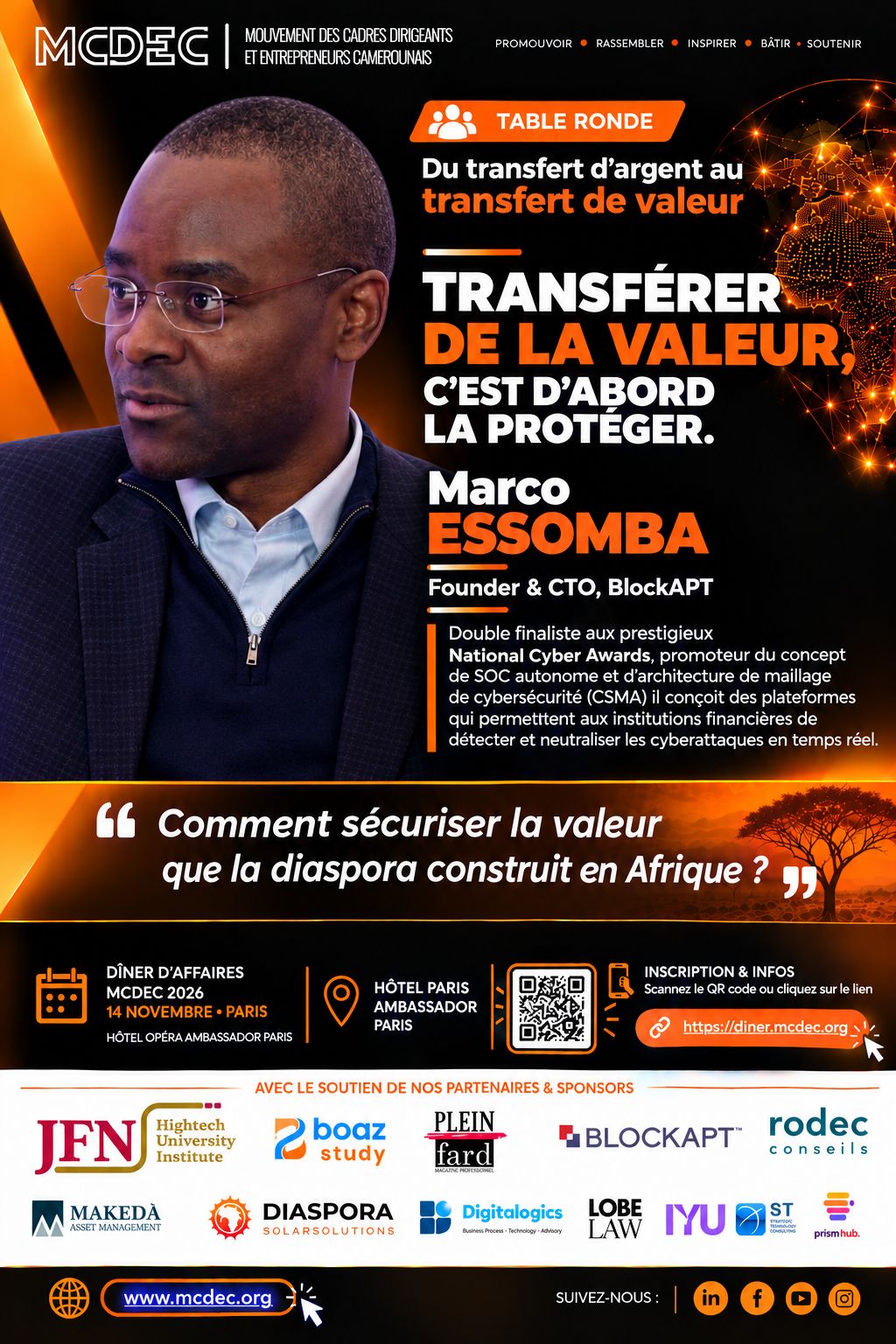
Next speaking appearance
Paris Marriott Opera Ambassador Hotel · Paris, France
Reception from 18:30 · Round table at 20:30 (Paris time)
Strategic round table
Transferring value means protecting it first.
I’ll join the MCDEC strategic round table to discuss how the diaspora’s capital, skills, networks and knowledge can support productive, sustainable investment in Africa.
Diaspora, finance & the knowledge economy: investing differently in Africa’s future.
MCDEC’s LinkedIn announcementWhy the attack surface that matters most is the one your own architecture created, and how a unified, automated layer reduces it without adding headcount.
What AI automation should actually be pointed at in an SME: not more dashboards and more alerts, but a system that notices, decides and acts.
The convergence of two disciplines most teams still run separately — security and application delivery — and what breaks when they stay apart.
A practical view of cryptographic agility and quantum-secure communications, and the migration decisions that have to be made before the deadline.
The Pivot Intelligence Model, and how to get automation that acts fast enough to matter while still telling a human why it did what it did.
Speaker
European Legal Security Forum
Guardicore Security Stage — “Complexity is the Enemy of Security”
Host ambassador
CyberTalks, London
One of London's largest cybersecurity events
Featured founder
MCDEC Business Talks
Founder interview on building BlockAPT
Panellist
Industry panels
Regularly called on for cybersecurity panels and round tables
Booking
Send the date, the audience and what you want them to leave thinking about. I will tell you honestly whether the topic fits — and if it does not, who it would.